- Inside Sports Network
- Posts
- Paul Tesori Q&A Part 1
Paul Tesori Q&A Part 1
Paul Tesori breaks down Webb Simpson's US Open victory to Josh in an interview, ISN's OAD contests, and Bryan updates his ADP on some players in PGA Best Ball.

Josh Segal
December 31, 2025
ISN’s One and Done Contests
Before we get to our Paul Tesori interview, this year we are offering TWO One and Done contests this year.
Our first contest is for our subscribers only. The buy in is FREE! If you finish inside the top 5, you have the chance to pick a golf trip to Oak Hill, Riveria, Tree Farm, and potentially a couple more in the Northeast and Midwest. All you have to do is be a member of ISN!
Our second contest is for anyone that wants to join! If you are looking for a lower stakes, more casual league, this is for you. The buy in is $50. Make sure to join and tell your friends too! Click the link here.
Closing Stretch
Josh Segal
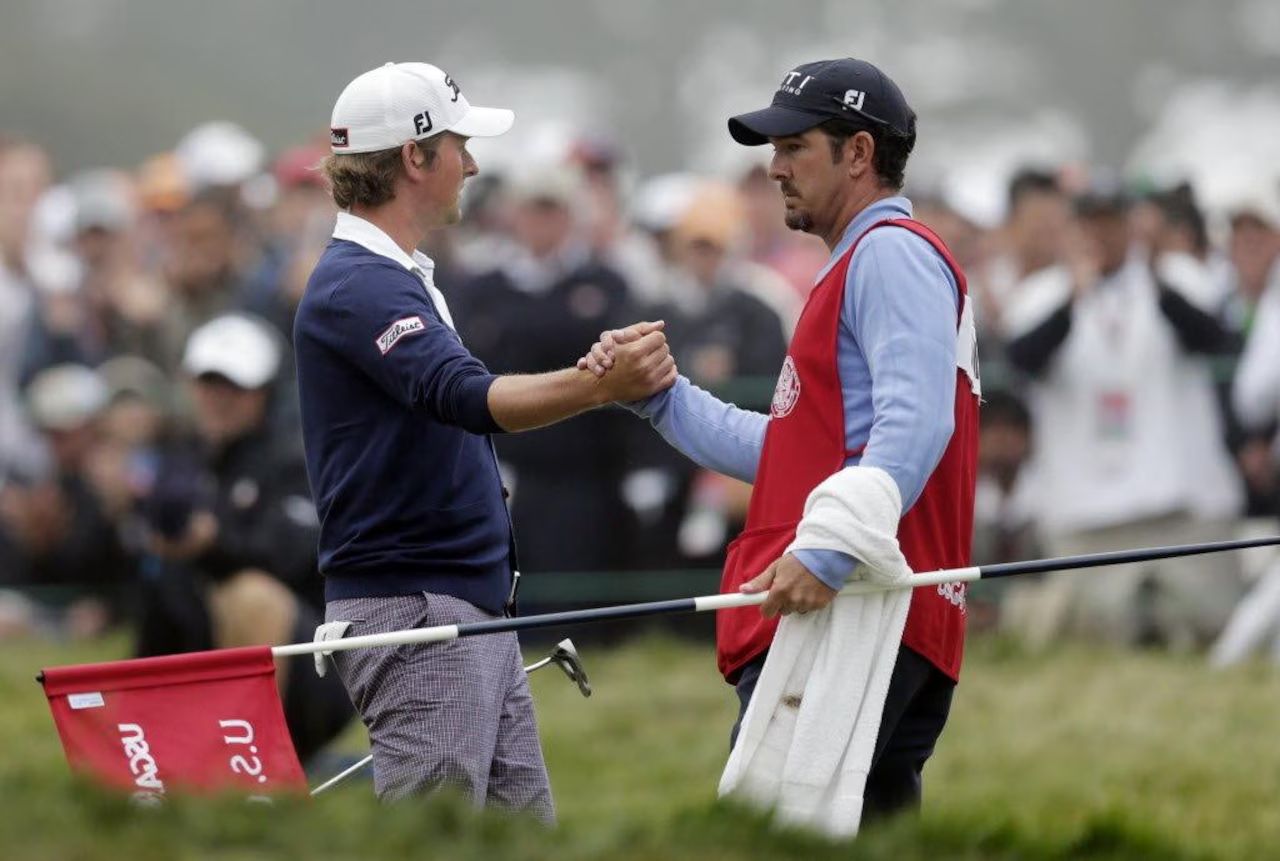
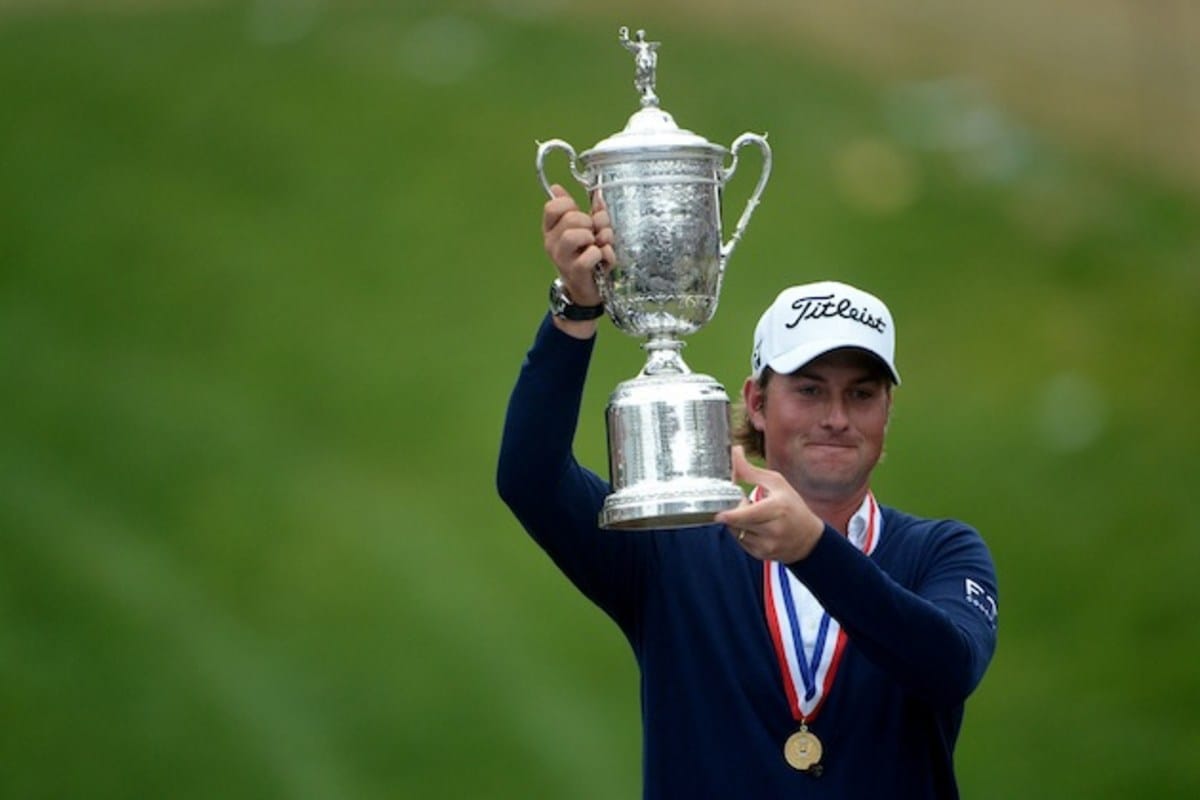
Paul Tesori on winning the U.S. Open with Webb Simpson
(via AL.com)
I had the luxury and honor of interviewing longtime PGA Tour caddie Paul Tesori, who won the 2012 U.S. Open and 2018 Players Championship with Webb Simpson. We went through a number of different topics. I am going to divide the interview in two parts for the newsletter. This part is about him and Webb winning the U.S. Open. I will also attach the podcast interview link below too for the full interview!
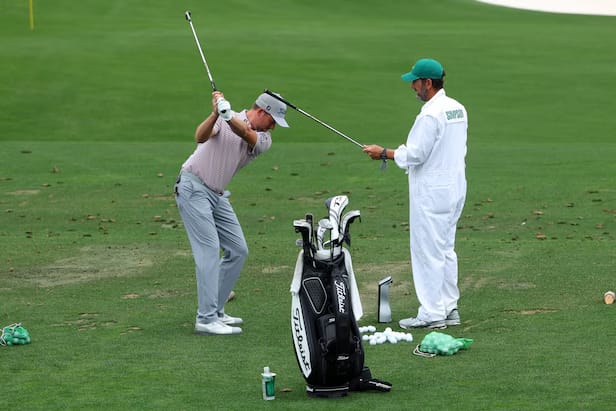
Josh Question: Something that you have talked about already in this interview is you’re a caddie, but you’re also a swing coach. I watched a video of Webb talking about the 2012 US Open and how he was struggling going into the week. I believe he missed the cut by seven or eight shots. He didn’t have a great Monday or Tuesday practice round. Then on Wednesday, something clicked on the range and he did mention you were helping him with his swing. Walk me through that Wednesday practice range session that propelled him?
Paul Tesori: Yeah, I mean this is all of sports and it doesn't matter what level you play the game at, but I always feel like when you're playing poorly, you're not that far away from playing. And the sad thing is the opposite, the vice versa is true. When you're playing really well, I've always said, you need to know why.
If you know why you're playing well, you'll keep playing well for longer periods of time. Um, the problem is, when you don't know why you're playing bad because you can get pretty lost, pretty quick. We kind of knew what was going on, but when you're trying to put together the sequencing in a golf swing, sometimes you can get that sequencing wrong.
Yes, we played and we missed a cut the week before the memorial. And then memorial missed a cut by seven or eight shots. Show up Monday. Monday, Webb's son took his first ever steps and Webb didn't want to be there. The most miserable I've ever seen him was a practice round at Olympic Club on Monday.
Wednesday we were the last people in the range. They actually had to come ask us to stop hitting balls because it was getting dark and they still had to prepare the range for the next morning for us. Webb always had certain feelings that he'd rather think, and then he had ones he didn't want to think.
And so as we were chiseling through kind of what to try to think about, we just went back to an old thought of his, which was just staying really, really centered on the backswing and that was a comfortable thought for Webb. So late Wednesday afternoon, we just went back, I held the club on the side of his head and that's what we started doing.
For me, going through the experience of Monday, Webb being the most miserable I'd ever seen him to standing in the 71st fairway with the hardest shot he's ever had in his life, and he just looked at me and goes, Pauly, it doesn't matter what happens. He goes, if I win this thing or I win a money title, all that, it's all gonna go away one day to see a transformation in six days from a miserable guy in a practice round to a guy perfectly at peace, very nervous.
(via Golf Digest)
Josh Question: Walk me through the final round on Sunday and your analysis of watching people play the 8th hole on Sunday that factored into your club selection.*
*disclaimer, I broke up Paul’s question to the previous answer into two parts for organization purposes in this newsletter.
Paul Tesori: I remember we were in, I think, seventh place going into Sunday, and he had not done one interview. And on the way over, one reporter, I don't remember who it is now, just said, “Hey Webb, you know, this is the first major you've kinda had a chance to play well, and how do you feel today?” He is like, “I feel good. You know, I like the golf course.”
You don't really have time to think ahead because the first six holes are so hard. After he talked to that guy, we had a talk on the way over and I said, “Hey, I know this is the first time you've been in this position. I've been fortunate enough to be in this position a lot.”
I was like, “What are you gonna do with scoreboards?”
He (Webb) goes, “I'll watch 'em like I always do.”
I said, “can I offer some advice? The first six holes are so hard. If you get off to a hot start and you're two under through six, you're gonna have a tendency to wanna look and see where you are. Yeah, and if you're tied for the lead or one back or two back, you're going to add nerves.
I said, “Or if you're too over through the first six and you look up, everybody's playing well and you're an 18th, there's a tendency to let down. I was like, do me a favor just for today. Don't look.”
It happened exactly the way we thought he was two over through five and got the best break of the entire day on number six. He pushed a six iron to a front light, right flag, hit on the right fringe, kicked down, made birdie on almost an un birdable hole. Then birdied seven!
And then one of my favorite stories was number eight, the par three. Just a crazy little chain of events, but I always kind of go out and watch a little bit of golf, especially back then before everything was streaming. Right now you can learn more by sitting in your hotel and your PJs just watching golf. But back then, you had to go watch some golf and you always wanted to watch the drivable hole, number seven to see what guys were doing.
And then I just happened to watch number eight. Two was a good place to sit, fill out my pin sheet, and I watched three straight groups come in like a kind of a middle-ish back left pin. Six players that hit it, five came up short of the green. For people that are listening to this, it's impossible to be short of the green.
The pin was on whatever 20, that means they're landing this ball 12 to 15 yards short of where they want. And I've never seen it. I had it in my mind and we got there and Webb’s now birdied six and seven back to even for the day. You know, you're in the mix somewhere. And we get there and he is like, “Hey bud, you like a big seven or a little six?”
I said to him, “this is gonna sound ridiculous. I watched a lot of golf. It's playing longer. I think it's a five iron.”
He said, “five iron Paul? I can't hit five iron. It's gonna go over the green.”
I'm like,” Bud, do me a favor. Just hit a regular five iron.”
He's like, “okay, I'll take a couple off of it.”
He pulls it and I just remember in the air it's going right at it and I'm like, “this is gonna go over the green.”
He wanted to maybe hit seven and I talked to him in a five and it landed 12 yards short of the pin kicked on the green. He made his 20 footer.
I was out just observing what was going on and just so happened to watch three consecutive groups and later on, Ernie, who had taken the lead, after an eagle in the hole before hitting a perfect shot on number eight. It came short of the green, made bogey or double, and that was the hole that kind of transferred everything.
Josh Question: Something that you mentioned before is that you're not just a caddy, you're a swing coach too, which I think is really fascinating. So kind of talk me through the 18th chip and what you were feeling when he was like, “how do I hit this shot, Paul?”
Paul Tesori: The second shot on 18, we missed the fairway to the left. There's no way, at least that day, there was nowhere to hit the green out of the rough. You couldn't hit the green. And so we tried to aim a little bit, right, and he did. He actually got a really bad break. The ball finished about a quarter of an inch behind what used to be a sprinkler head. At a lot of these are really elite events, they'll come in and they'll put like a little sod circle over the sprinkler head so balls don't hit a sprinkler head and go over the green trying to win a major championship.
Our ball finished about a quarter inch behind it was the worst lie I've ever seen in a golf tournament because behind where the little sod scene was cut out there was five and a half inch rough.
So it went from kind of flat to massive. So if you were looking at it from the left side of the green, it would've looked beautiful if you were looking at it from the right side of the green, you couldn't see the ball. And so, yeah, Webb just looked right at me and he said, “Paul, I have no idea how to hit this shot. What do I do?”
And you, you're not gonna hear that very often, in your line of work. There's no doubt about it. But, it was a shot that we had worked on a little bit early in the week because the rough was so thick and Webb wasn't quite used to, uh, you know, that kind of depth yet. Still early in his career as far as major championships go and everything else.
I just kind of, we always called it kinda like “the chop and stop” is what we called it. So chop is you just kinda leave your hands where they are and you set the club really vertical and then you stop forward momentum as soon as you get to the ball. It's just kind of, I've always, you know, they say kind of cock the wrist or set the wrist.
People don't realize, we had to aim about 10 or 12 feet right of the hole. If they would've given us eight feet to 10 feet, we would've taken it and not hit the chip for sure because if you would go at the pen to try to hit it close and you hit it too hard, it would actually go down the little walkway and it would've gone 50 to 70 yards short of the green.
I just remember in the moment, like you know what, if we make a bogey, that's fine, like if you end up losing it, there's not much you can do. But if you make double and lose by one, that's something you would never forget. So the chip came out dreamy, he did exactly what we talked about. He set it quick, he stopped it right away, and it came out soft and came out barely left, landed and trickled down about three and a half feet.
I still remember this day, like just the feeling of you wanna celebrate the chip, but now I knew where he was in the golf tournament. He still hadn't looked. Now he knew he was either leading or close to the lead because you could tell by the crowd.
He said, when he birdied number 11, for his fourth birdie in five holes, he could tell by the crowd's reaction, okay, something special's going on here, and he hit incredible shots. He just didn't make a putt down the stretch. He poured that putt in and yeah, what a great feeling. But I don't think to this time I've still ever had a player say, I have no idea what to do here.What do I do? So I was fortunate enough to say the right thing at the right time.
(via TSM Interactive)
Here is the link to the full interview with Paul Tesori:
Bryan
PGA Best Ball Update
Robert MacIntyre ADP 17.9 - Since he has committed to the American Express, I have been hammering him in a ton of drafts. I may have missed out on ADP but you can definitely adapt on the fly if you like him as much as I do in light of this news. He is also going to play at RBC.
Taylor Pendrith ADP 18.7 - Pendrith got booted from the Masters qualification via top 50 OWGR by year’s end. He will have to play a lot of golf to make up for it. I am seeing scenarios where you get a TON of starts early on from him. He will also play RBC at the end of the contest.
JT Poston ADP 25.7 - JT is in the signature events but is not in the Masters. I expect him to play a ton early in the year to get into the majors if at all possible. He is a slow riser, but I still love it at this pick. He is the perfect type of status where I can see him double duty at the signature events but will stoop down to the lesser events if he needs to improve rankings.
Michael Brennan ADP 33.6 - he is still too cheap here at ADP. Young kid where I can see him playing a ton early. Combine that with his birdie abilities on easy courses from previous tour stops and an elite OTT skill already, he should feast at birdie fests as he tries to elevate his status as a player into the big purse events. I see no reason he does not play Sony, Amex, AND Farmers potentially. I also can see him playing Cog.
Denny McCarthy ADP 39.8 - If JT Poston is too rich for your blood, Denny is still right there. I don’t see that his ADP is changing much. He is a great value that should put his foot on the gas to get to the Masters early on. He plays the John Deere most years, so I am putting him in that tournament which is a massive bonus.
Sami Valimaki ADP 44.3 - he is still being massively disrespected. He plays a ton of the non elevated events and has an extremely high ceiling in his good weeks. This is a great play on a team where you’ve loaded up on signature status guys. I view him as a guy with elite talent that will fill a roster spot as a warm body at the lesser events with proven winning upside on multiple tours.
Tom Kim ADP 65.2
Max Homa ADP 56.9
Billy Horschel ADP 58.5
Byeong Hun An ADP 67.2
Going to group this quartet the island of misfit toys. None of them are in the signature events. All of them have shown a ceiling in the past and I am not ready to give up on them at these ADPs. In teams I have loaded up with siggy guys early, I like taking one of these guys late. Horschel is the one I trust the most to grind his butt off early and has the most winning upside.
Rickie Fowler ADP 55.9
Thomas Detry ADP 70.4
Jhonatton Vegas ADP 71.3
Lucas Glover ADP 66.1
Daniel Berger ADP 68.5
Tom Hoge ADP 68.4
The second island of misfit toys. The difference on this one is that their status is similar to Denny and Poston where they are in signature events, but they do not have status at the majors. If you believe in these guys as try-hards (some I do and some I do not), then they should be continuing to grind to get into the majors with the signature status. They are all almost free so it allows you to take advantage of the mid rounds to get guys like Sami, Thor, Rico H, etc.
Bonus: Sponsor’s Exemption Darlings!
Jordan Spieth ADP 16.9
Adam Scott ADP 69.4
Why I have included these two together? I can see them feasting on some of those sweet, sweet Sponsor’s Exemptions for Signature events. They are both viable picks with Spieth climbing quite fast. We may have missed the boat there but I think depending on the roster I may continue to add (been getting him in the third personally). Scott has similar advantages and may receive some special treatment so he is good with me on the right team at the end of the draft.
Flex of the Week
Shoutout to one of our subscribers, JSully 32, in our discord who won The Puppy season long best ball contest on Underdog. He took home $100,000! This was his winning lineup:

How Do I Become an Insider?
If you want to become an insider to ISN, click the button below, which will take you straight to our website
If you aren’t already, subscribe to the newsletter! We drop our latest newsletter every Wednesday morning.